



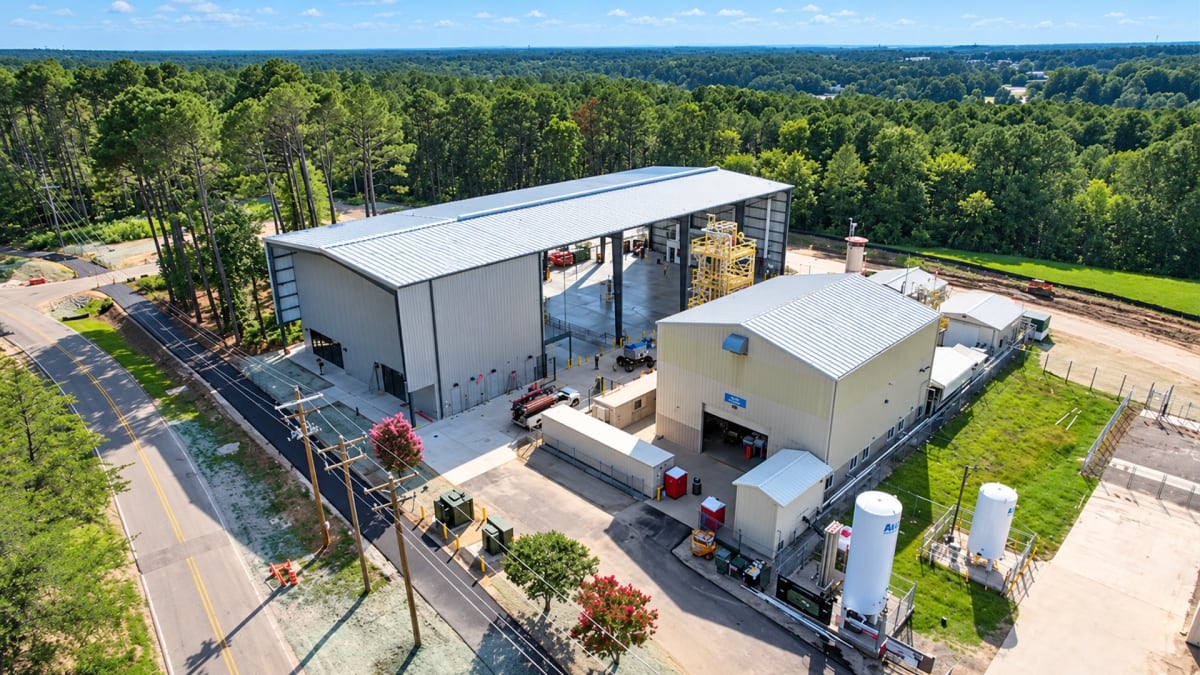
The $14 Million Shortcut to Market
An invention can behave beautifully in a laboratory and become considerably less agreeable at factory size. In Research Triangle Park, RTI International has made more room for that awkward, expensive introduction.
Its $14 million Pilot Xcelerator expansion opened in September, doubling the organization’s infrastructure for moving discoveries toward commercial use. The 25,000-square-foot facility gives startups, established companies and government partners access to equipment, engineering expertise and testing space that many would struggle to build themselves. For a growing North Carolina company, that means an opportunity to prove a process before committing to a production facility of its own.
Consider the carbon-capture solvent developed by RTI chemist Marty Lail and his colleagues, whose work appears in the Pilot Xcelerator’s origin story. Beginning in 2009, the team tested hundreds of formulations to tackle a stubborn problem: capturing industrial carbon dioxide required too much energy and cost too much money.
A promising formulation emerged. But a laboratory result could only answer so much. Would the solvent hold up during continuous operation? How would it affect equipment? Would the economics survive the jump in scale?
Those questions sent the technology through pilot demonstrations at RTI and larger testing facilities in Alabama and Norway. In 2022, successful demonstrations led to a partnership with SLB, which exclusively licensed the technology. The journey took years. Even a good shortcut still requires doing the work.
At the Pilot Xcelerator, that work has a practical home: configurable process bays, laboratories for sampling and troubleshooting, and dedicated control rooms for continuous monitoring. Engineers can design, build and operate larger systems, collecting evidence about performance, safety and cost. Sometimes the results support the next investment. Sometimes they reveal a problem that needs another round of laboratory work.
The expanded facility supports sustainable aviation fuel, carbon capture, critical minerals, advanced recycling and industrial biotechnology. Across those fields, the underlying challenge is familiar: an entrepreneur needs credible operating data to persuade investors and commercial partners, but generating that data requires infrastructure and expertise.
For the Triangle, having those capabilities nearby gives inventors another reason to develop their technologies here. Shared facilities can help companies conserve capital while preparing for bigger demonstrations and eventual production. The expansion creates room for that demanding middle stage, when a discovery must start answering questions a future customer will ask.
Find help developing your next business idea through the Guide to North Carolina business consulting directory: https://www.guidetonc.com/business-consulting-firms
