



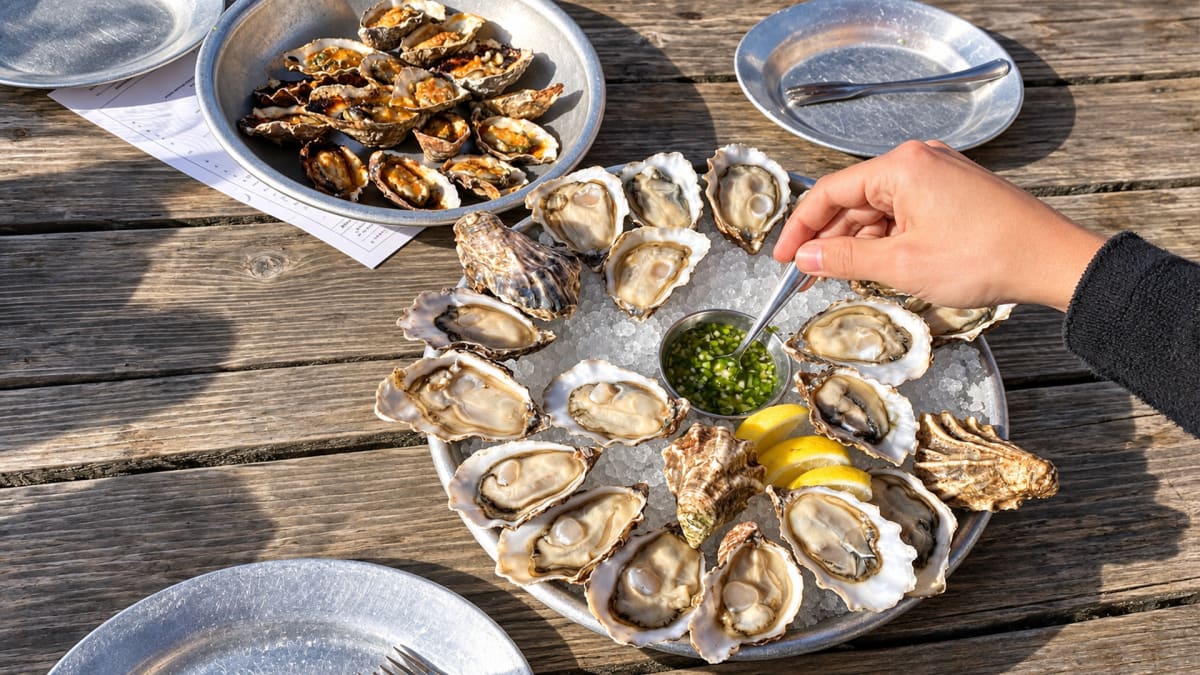
On the Half-Shell Highway!
An oyster can tell you where it grew, provided you listen with your taste buds. Along North Carolina’s southern coast, a boat ride, a shucking lesson and dinner offer three ways to learn the language.
The North Carolina Oyster Trail connects more than 90 farms, restaurants, markets and educational stops from Cape Hatteras to Cashiers. November makes a sensible starting point: wild oyster season begins October 15, while farmed oysters are available year-round. You can build a coastal afternoon without attempting the entire map.
Start on the water with Coastal Eco Adventures. Its two- to three-hour oyster excursion launches from Soundside Park in Surf City, visits the Three Little Spats seed nursery and continues to a working farm. Guests learn how oysters grow, see farming and harvesting practices, and get an opportunity to shuck and taste aboard the boat.
Arrange the trip in advance; oyster tours carry a maximum of five passengers. Wear secure, closed-toe shoes that can get muddy, bring a windbreaker and dress for cooler conditions offshore. Life jackets are required, and guests must be able to walk unassisted along an uneven nursery path. Times can change with weather, tides, wind and currents. Before booking, ask about children’s age eligibility, winter availability, tasting arrangements and weather cancellation terms.
The trail’s farm-tour guide helps distinguish that outing from a restaurant visit: you spend time with the growers and the conditions behind the harvest. At N.SEA Oyster Barn, with a Hampstead mailing address near Surf City, Shuck & Chill brings the lesson ashore. No reservation is required; outdoor seating is first come, first served. Beginners receive a free shucking lesson, with tools and grills available for oysters eaten raw or roasted. Children are welcome with supervision. Check November’s schedule before traveling.
Finish in downtown Wilmington at Seabird, where the seasonal menu features oysters and shellfish from small-scale local fishers and growers. Reservations are available, and Tuesday is currently its closed day.
The trail’s explanation of “merroir” connects these experiences: salinity, temperature and nutrients shape an oyster’s flavor and texture. Farming also improves water clarity, creates habitat and reduces pressure on wild reefs while supporting coastal livelihoods.
Confirm schedules and oyster availability before setting out. Then taste carefully. That difference between two oysters may be the creek making itself known.
Find more coastal flavor in the Guide to North Carolina seafood restaurants directory: https://www.guidetonc.com/seafood-restaurants
