



A Better Bite at School
There’s more happening behind North Carolina’s cafeteria line this year than deciding whether Tuesday calls for chicken or tacos. School nutrition professionals are sharpening knife skills, testing recipes and learning how to make fresh ingredients work on the scale required to feed hundreds of students before the bell rings.
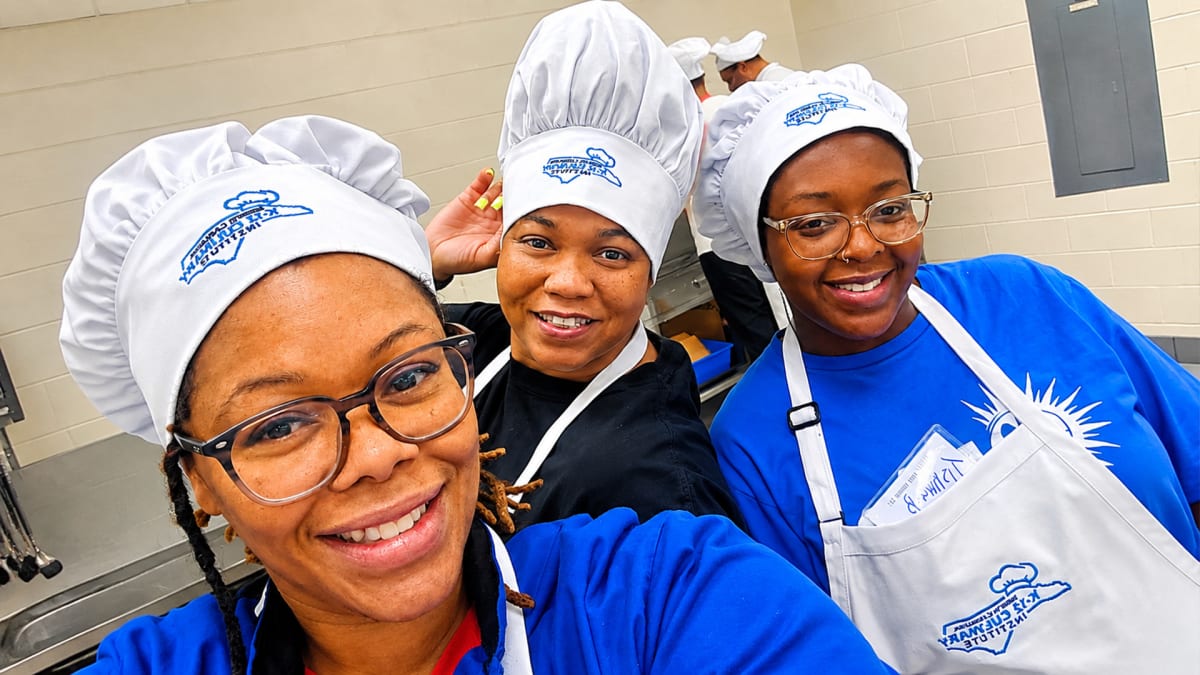
This summer, regional workshops through the NC K-12 Culinary Institute are bringing that work into focus. Developed by the North Carolina Department of Public Instruction’s Office of School Nutrition with registered dietitians and chefs, the program trains school nutrition employees to prepare meals that meet federal standards while looking and tasting like something students will really want to eat. More than 1,520 professionals have graduated as culinary specialists since the institute began in 2016.
The Cafeteria Crew Goes Culinary
The three-day workshops cover knife skills, accurate measuring, equipment use and preparation techniques for meats, grains, fruits and vegetables. Participants also tackle merchandising, marketing and nutrition education. Graduates become chef ambassadors who bring those skills back to colleagues in their own schools and districts. This summer, Rowan-Salisbury Schools and Wake County Public School System are hosting regional workshops.
That teach-it-forward model gives the program reach beyond a single training kitchen. The institute has helped develop more than 200 school-meal recipes featuring whole grains, lean proteins, produce, low-fat dairy and locally grown ingredients, with some recipes revised to reduce sodium and sugar.
The larger shift is professional, too. The School Nutrition Association of North Carolina supports continuing education through workshops, conferences, certification and other professional opportunities. Its certification program aligns with USDA Professional Standards, helping cafeteria employees build credentials alongside practical skills.
From North Carolina Farms to Trays
Then there’s the produce. NC Farm to School has connected public schools with North Carolina-grown food since 1997, when western apples and eastern strawberries helped launch the program. Today, participating schools can purchase everything from sweet potatoes and collards to peaches, blueberries and tomatoes grown in the state.
Put those pieces together and the humble lunch tray starts carrying considerably more weight. It represents trained professionals, North Carolina farmers and a growing effort to make nutritious food appealing to students. For the people working behind the serving line, that means school lunch is increasingly a craft, and one with consequences well beyond the cafeteria.
Want to learn more about education in North Carolina? Check out https://www.guidetonc.com/education-childcare
